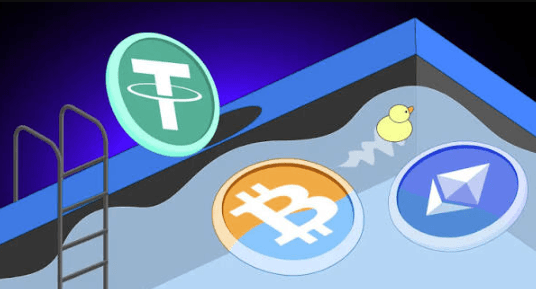
Crypto market liquidity mining involves supplying assets to decentralized exchanges or lending protocols to enable trades and borrowing, earning rewards in return. It relies on automated market makers and liquidity pools to facilitate swaps and liquidity. Rewards and fees vary by platform and can be affected by impermanent loss, capital efficiency, and tokenomics. Participants must weigh potential income against risk and ongoing monitoring requirements, as platform design shapes outcomes and incentives, leaving questions about sustainability and optimization unresolved.
What Liquidity Mining Is (In Plain English)
Liquidity mining is a mechanism by which users provide assets to a decentralized exchange or lending protocol to enable trading or lending activity, earning rewards in return.
This approach clarifies the liquidity definition as the capacity to facilitate swaps and loans efficiently.
Reward mechanics link activity to incentives, quantifying participation and distributing tokens, fees, or benefits based on contribution and duration.
How AMMs and Liquidity Pools Work
AMMs (Automated Market Makers) and liquidity pools automate asset exchanges without traditional order books. They rely on constant-product formulas and liquidity providers, who supply pairs and earn fees. Traders execute swaps against pooled reserves, creating price movements driven by supply, demand, and pool composition.
dca mechanics influence position sizing; impermanent loss risks arise from relative asset price shifts and pool rebalancing.
Evaluating Fees, Rewards, and Impermanent Loss
The analysis weighs underwriting liquidity against opportunity costs, accounting for trading fees, reward rates, and price drift.
Outcome sensitivity hinges on incentive structures and protocol design, clarifying whether rewards compensate for risk and potential impermanent loss over time.
See also: How Technology Is Advancing Workforce Collaboration
How to Participate: Platform Selection and Ongoing Monitoring
Selecting the right platform for liquidity mining hinges on comparative metrics such as total value locked, fee structures, and reward models, then validating these against risk profiles and performance history.
Participants should assess liquidity mining incentives, platform safety, and governance transparency, while monitoring slippage, impermanent loss exposure, and security incidents.
Ongoing monitoring enables adaptive risk management and sustained optimization of returns.
Conclusion
Liquidity mining stands as a modern engine moving markets: capital flows like water through digital reservoirs, catalyzing trades yet exposing funds to shifting currents. When liquidity is abundant, slippage shrinks and prices converge; when imperfect, impermanent loss warms the surface of returns. The math is precise—fees, rewards, and time must outweigh risk. For participants, continuous monitoring is the compass; for platforms, transparent design is the horizon. In the ledger of markets, participation leaves traces and possibilities.
